
Category Archives: ANNOUNCEMENT

7 Financial Mistakes Small Businesses Make—and How to Avoid Them

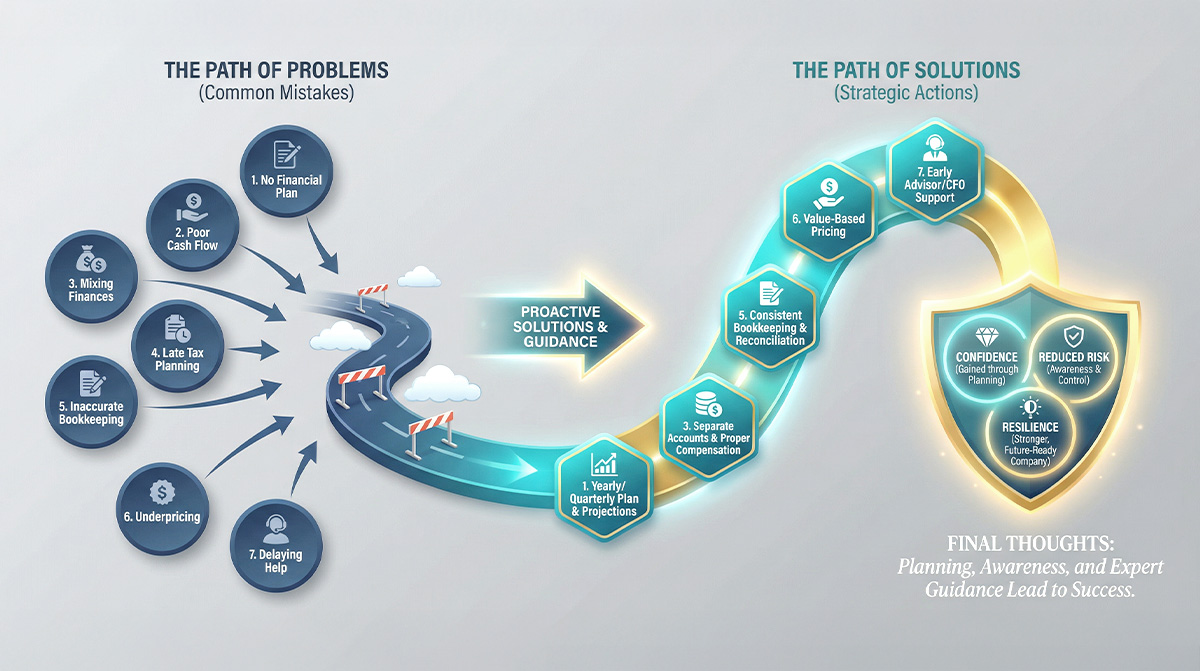
Running a small business means tackling challenges that change daily. Without a solid financial foundation, even the most dedicated business owners can stumble into costly mistakes. The positive news? With awareness and the right support, these issues are preventable. Here are seven common financial mistakes small businesses make—and how to avoid them.

1. Operating Without a Financial Plan

Many owners operate on instinct rather than information. Without a clear roadmap, it’s easy to overspend or miss growth opportunities.
Solution: Build a yearly and quarterly plan with revenue targets, expense estimates, and cash flow projections.

2. Poor Cash Flow Management

Cash flow problems—not profit issues—are the top reason businesses fail.
Solution: Track cash flow weekly and maintain a minimum monthly reserve.

3. Mixing Personal and Business Finances

This complicates bookkeeping and creates tax issues.
Solution: Keep accounts separate and compensate yourself properly.

4. Waiting Too Long to Plan for Taxes

Thinking about taxes only at filing time can lead to preventable costs.
Solution: Meet quarterly with a tax advisor to review income, deductions, and upcoming obligations.

5. Inaccurate or Incomplete Bookkeeping

Without accurate data, no financial decision is reliable.
Solution: Maintain consistent bookkeeping and monthly reconciliations.

6. Underpricing Products or Services

Many small businesses undervalue their offerings.
Solution: Price based on cost, demand, and desired profit—not guesswork.

7. Not Seeking Help Early Enough

Many owners wait until a crisis to get advice.
Solution: An advisor or fractional CFO provides proactive support before issues escalate.

Final Thoughts

Avoiding these mistakes isn’t about perfection—it’s about planning, awareness, and expert guidance. When business owners have the right financial support, they gain confidence, reduce risk, and build stronger, more resilient companies.
How Smart Tax Strategy Can Save Your Business Thousands Each Year

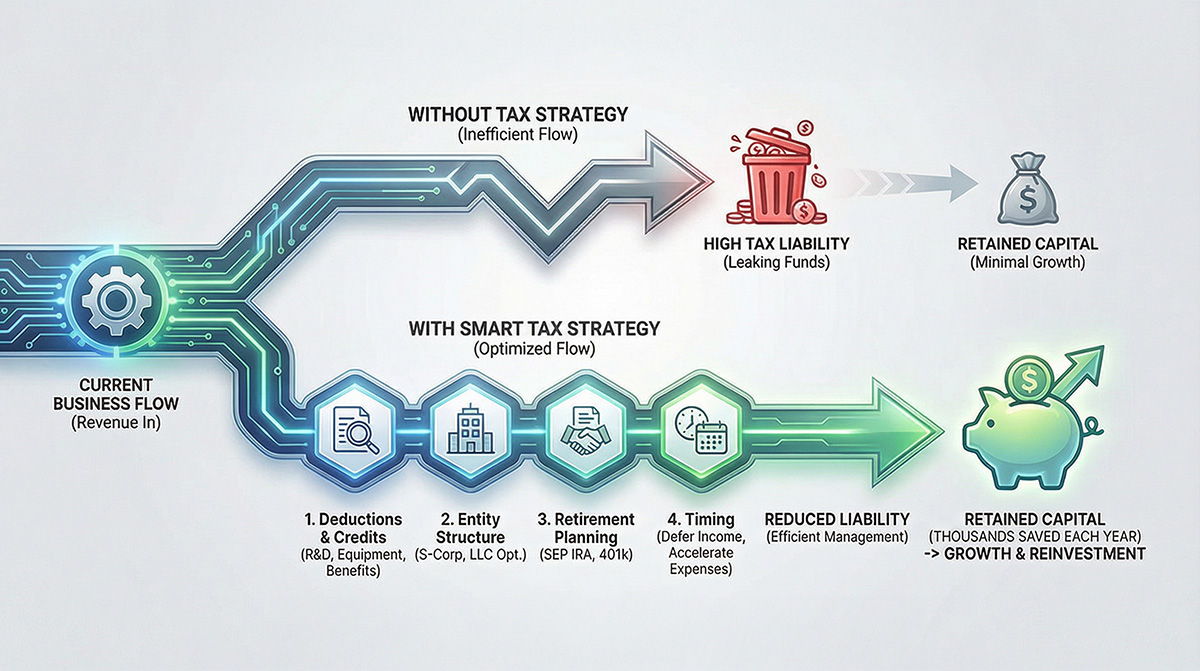
Taxes are one of the largest and least understood expenses small businesses face. Many owners pay more than they should simply because they don’t know where savings exist. A smart, proactive tax strategy can significantly reduce your annual tax bill. Here’s how.

1. Strategic Planning Ahead of Time

Most tax-saving opportunities require action before the year ends.
Strategy: Review finances quarterly to stay ahead of deductions and credits.

2. Maximizing Deductions

Many business owners miss deductible expenses like equipment, software, home office use, mileage, and retirement contributions.
Strategy: Track expenses regularly and categorize accurately.

3. Choosing the Best Business Structure

Your entity type can dramatically affect your tax bill.
Strategy: Evaluate whether an LLC, S-Corp, or C-Corp reduces your liability.

4. Utilizing Depreciation Benefits

Section 179 and bonus depreciation can offer major savings.
Strategy: Time equipment purchases strategically.

5. Leveraging Available Credits

Hiring, R&D, and energy credits are often overlooked.
Strategy: Have your advisor review your eligibility annually.

6. Smart Payroll Planning

Optimizing wages, distributions, and benefit structures can reduce taxes.
Strategy: Align payroll with your tax strategy.

Final Thoughts

A proactive tax plan strengthens your cash flow, reduces stress, and helps you grow with confidence. With expert support, small businesses can legally and effectively reduce their tax burden year after year.

What a Fractional CFO Can Do for Your Business (That Your Accountant Can’t)

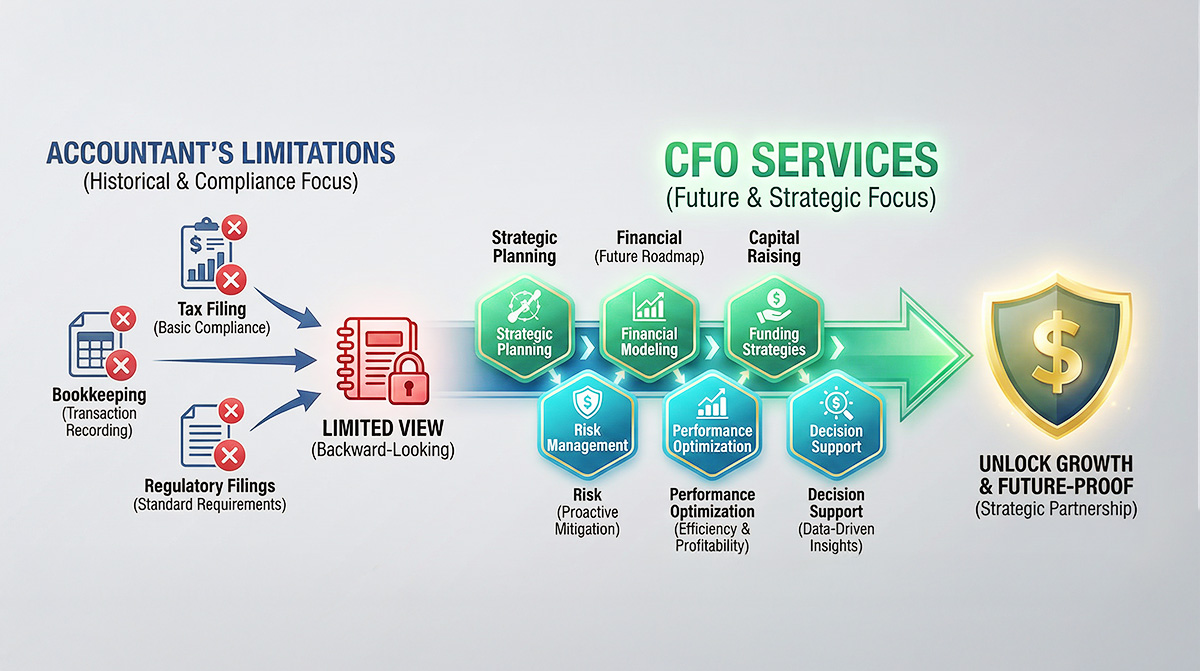
Most small businesses rely on an accountant or bookkeeper—but few have access to the kind of strategic financial leadership a CFO provides. A fractional CFO bridges that gap, helping businesses grow with clarity and confidence.

1. Strategic, Forward-Looking Planning

Accountants track what already happened. A CFO plans what should happen next.
Result: Better decisions based on accurate forecasts.

2. Cash Flow Optimization

Even profitable businesses can fail without healthy cash flow.
Result: Improved stability and smoother operations.

3. Profitability Analysis

A CFO identifies which products or services drive profit—and which drain resources.
Result: Better pricing and smarter resource allocation.

4. Financial Leadership for Big Decisions

Hiring, expansion, equipment, loans, acquisitions—CFOs guide these with clarity.
Result: More confidence and reduced risk.

5. Bank & Investor Communication

A CFO prepares financials and speaks the language lenders expect.
Result: Better financing outcomes.

6. Accountability & Reporting

Dashboards, KPIs, reviews, and performance tracking.
Result: A business that runs proactively instead of reactively.

Final Thoughts

A fractional CFO gives small businesses access to executive-level insight without the cost of a full-time hire. For owners seeking growth, stability, or better decision-making, CFO support can be transformational.