Running a small business means tackling challenges that change daily. Without a solid financial foundation, even the most dedicated business owners can stumble into costly mistakes. The positive news? With awareness and the right support, these issues are preventable. Here are seven common financial mistakes small businesses make—and how to avoid them.
1. Operating Without a Financial Plan
Many owners operate on instinct rather than information. Without a clear roadmap, it’s easy to overspend or miss growth opportunities.
Solution: Build a yearly and quarterly plan with revenue targets, expense estimates, and cash flow projections.
2. Poor Cash Flow Management
Cash flow problems—not profit issues—are the top reason businesses fail.
Solution: Track cash flow weekly and maintain a minimum monthly reserve.
3. Mixing Personal and Business Finances
This complicates bookkeeping and creates tax issues.
Solution: Keep accounts separate and compensate yourself properly.
4. Waiting Too Long to Plan for Taxes
Thinking about taxes only at filing time can lead to preventable costs.
Solution: Meet quarterly with a tax advisor to review income, deductions, and upcoming obligations.
5. Inaccurate or Incomplete Bookkeeping
Without accurate data, no financial decision is reliable.
Solution: Maintain consistent bookkeeping and monthly reconciliations.
6. Underpricing Products or Services
Many small businesses undervalue their offerings.
Solution: Price based on cost, demand, and desired profit—not guesswork.
7. Not Seeking Help Early Enough
Many owners wait until a crisis to get advice.
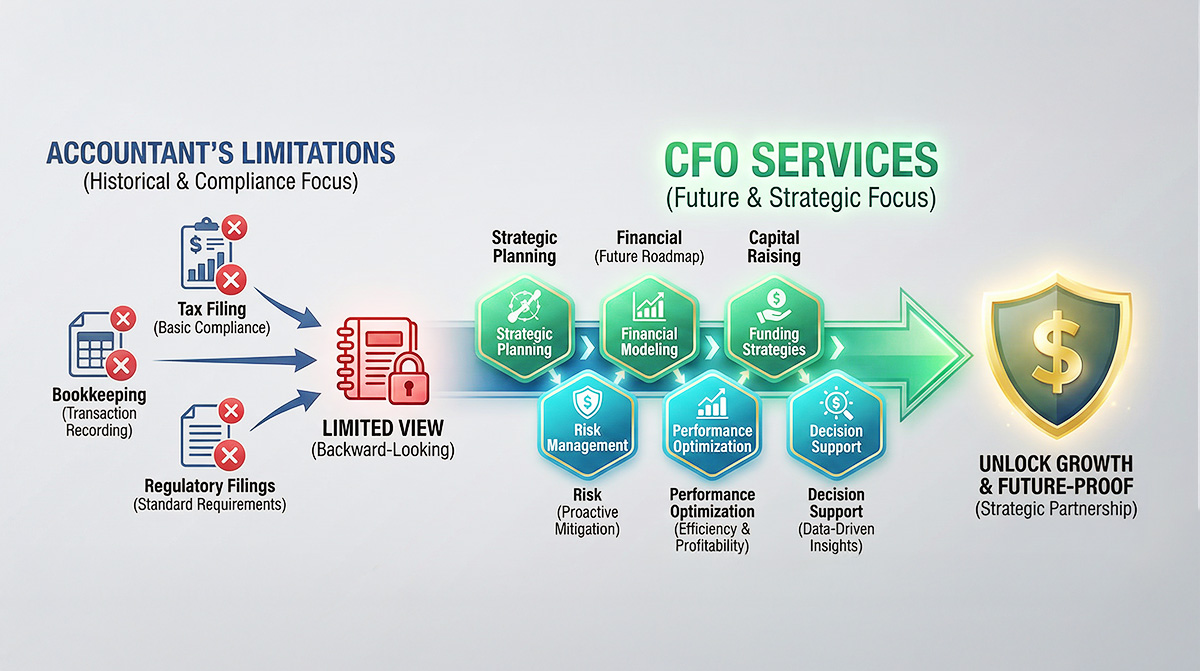
Solution: An advisor or fractional CFO provides proactive support before issues escalate.
Final Thoughts
Avoiding these mistakes isn’t about perfection—it’s about planning, awareness, and expert guidance. When business owners have the right financial support, they gain confidence, reduce risk, and build stronger, more resilient companies.