
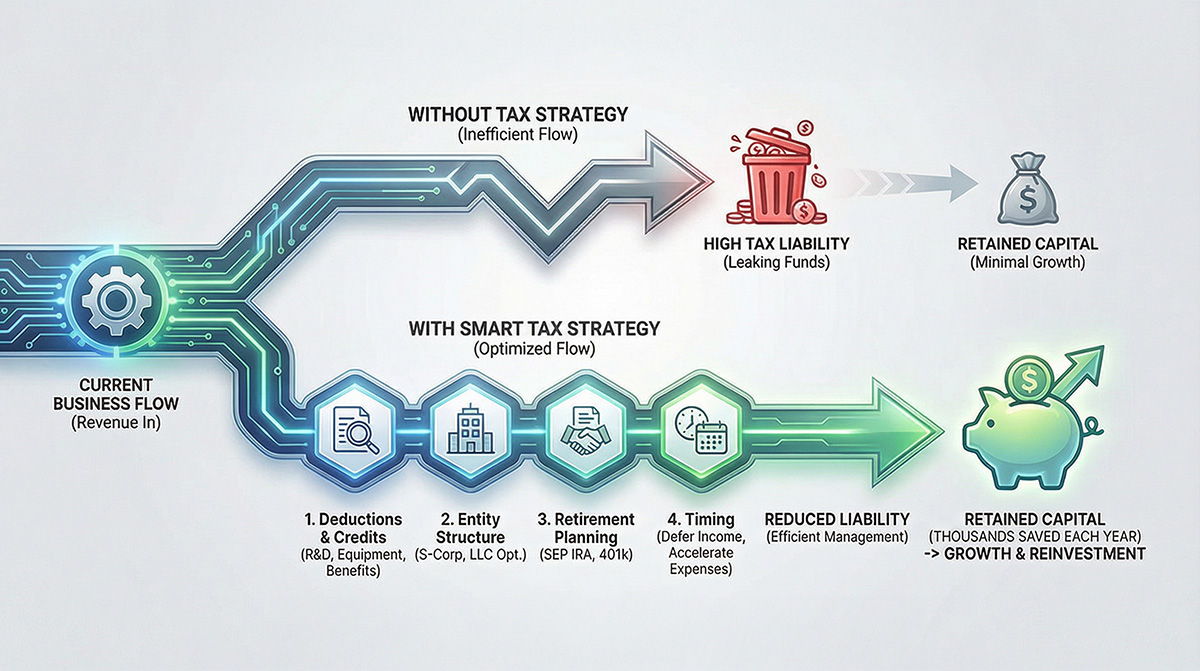
Taxes are one of the largest and least understood expenses small businesses face. Many owners pay more than they should simply because they don’t know where savings exist. A smart, proactive tax strategy can significantly reduce your annual tax bill. Here’s how.
1. Strategic Planning Ahead of Time
Most tax-saving opportunities require action before the year ends.
Strategy: Review finances quarterly to stay ahead of deductions and credits.
2. Maximizing Deductions
Many business owners miss deductible expenses like equipment, software, home office use, mileage, and retirement contributions.
Strategy: Track expenses regularly and categorize accurately.
3. Choosing the Best Business Structure
Your entity type can dramatically affect your tax bill.
Strategy: Evaluate whether an LLC, S-Corp, or C-Corp reduces your liability.
4. Utilizing Depreciation Benefits
Section 179 and bonus depreciation can offer major savings.
Strategy: Time equipment purchases strategically.
5. Leveraging Available Credits
Hiring, R&D, and energy credits are often overlooked.
Strategy: Have your advisor review your eligibility annually.
6. Smart Payroll Planning
Optimizing wages, distributions, and benefit structures can reduce taxes.
Strategy: Align payroll with your tax strategy.
Final Thoughts
A proactive tax plan strengthens your cash flow, reduces stress, and helps you grow with confidence. With expert support, small businesses can legally and effectively reduce their tax burden year after year.